Daisy Jones & The Six's commercial peak
Daisy Jones & the SixDaisy Jones & The Six’s commercial peak arrived with Aurora in 1978, when the band’s music, publicity, and star image began reinforcing one another at extraordinary scale. The album became a hit across radio, record sales, and stadium stages, while the attention surrounding Daisy Jones and Billy Dunne made the group’s public identity almost as consequential as its sound. The triumph was real, but its machinery exposed a band increasingly organized around two stars who did not even want to share a bus.
From breakthrough to album launch
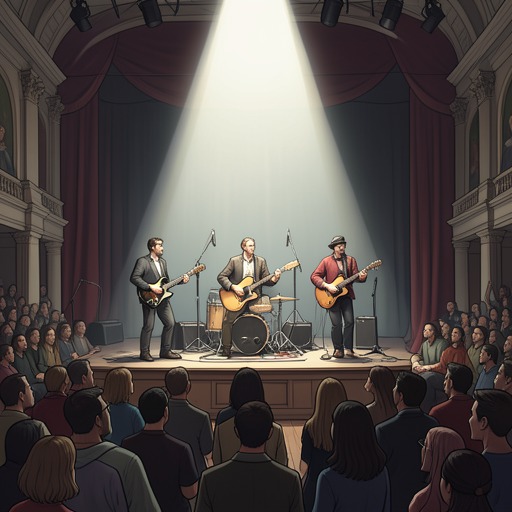
The ascent had begun before Aurora. Daisy had signed with Runner Records after refusing a demo arrangement that would have made her sing more smoothly and in a higher key; she wanted to write and perform her own songs. By the end of 1976, “Honeycomb” had reached number three on the Billboard Hot 100. Daisy and the band performed it on Don Kirshner’s Rock Concert and The Tonight Show Starring Johnny Carson, completed their North American dates, and prepared for a short European leg. The success established an audience for the combined act before its first full album together.
The campaign for Aurora coordinated music and publicity rather than treating them as separate tracks. “Turn It Off” was released as the first single, the band appeared on Midnight Special, and radio spots ran around the country in the weeks before the album arrived. That same week, Rolling Stone published a cover story framed around the conflict between Billy and Daisy. Its paired profile photographs placed their faces close together, turning the friction between them into a question for readers and a highly recognizable image for the band. Rod Reyes later described the article as a crucial step in making Aurora an event as well as an album.
Aurora was released on June 13, 1978. “Turn It Off” debuted at number eight, then climbed to the top of the charts, where it remained for four weeks. The album sold more than 200,000 units each week during the summer. These figures mark a rapid progression from a successful single to a release with sustained mass demand; the campaign did not merely announce the album but kept it in view as the central subject of music coverage, radio promotion, and public curiosity.
The record and its appeal
Contemporary assessments describe Aurora as both confident and unusually broad in its emotional reach. Jonah Berg regarded it as the album people had hoped the collaboration would produce, while critic Nick Harris emphasized its combination of stadium-scale force and intimate vocals. The record had powerful drums and guitar solos, but its songs could feel as though Billy and Daisy were singing directly to one another. Its accessibility was part of its appeal: listeners could put it on at a party or on a drive, then find lyrics that made the same record suitable for more private, painful moods.
Daisy described the album as being about needing someone who loves someone else. Billy connected it to the pull between stability and instability, and to his ongoing effort not to act destructively. Their accounts make the record’s emotional tension part of its commercial identity: the songs could be heard as love songs, but the people singing them supplied an unresolved conflict that publicity repeatedly brought into focus. The album’s broad appeal did not require that tension to be settled; it could make the music feel both widely accessible and intensely personal.
Images, fame, and public identification
The album’s visual presentation gave audiences another way to encounter the band. During the photo shoot, photographer Freddie Mendoza captured Billy and Daisy turning toward one another while the rest of the group faced the camera. He also singled out a closely framed image of their torsos, which he considered immediately affecting. The photographs joined the band’s music to a recognizable visual vocabulary, helping the release signify summer, sexuality, drugs, and rock ’n’ roll as well as a collection of songs.
Biographer Elaine Chang later stressed what Daisy’s appearance in the album image meant to young women. In her reading, Daisy’s exposed body did not seem arranged to please Billy or the viewer; the image communicated self-possession instead. Chang recalled that the cover made her fall in love with Daisy as a young girl, and described its significance for teenagers in the late 1970s. The image therefore worked as more than promotional packaging: it helped shape Daisy’s public identity as a woman who controlled how she presented herself. Years afterward, Mendoza found that people continued to ask about the photograph he had initially regarded as simply a job.
The fame behind those images became tangible on tour. In San Francisco, Warren Rhodes watched Billy step off a bus and draw a crowd of screaming fans; when Daisy emerged, the reaction grew still louder. Their celebrity was not evenly distributed across the group, and the public’s attention sharpened the distinction between the two front figures and their bandmates. Daisy’s notes to fans also reflected a personal dimension of that visibility: she wrote different messages for young girls, encouraging them to dream big.
Stadium scale and the cost of success
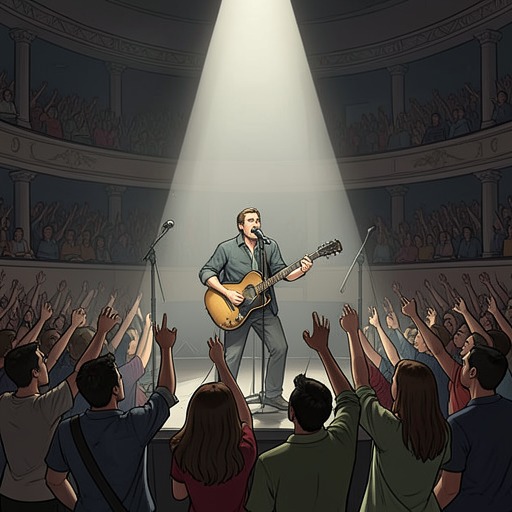
With “Turn It Off” at number one and Aurora selling at such a pace, Daisy Jones & The Six became the act to see that summer. The Aurora tour sold out stadiums, and promoters added holdover dates in major cities. The scale of the undertaking appeared even in the band’s transport: two buses carried the band’s name, one with Billy’s denim shirt in the background and the other with Daisy’s tank top. The division had a practical explanation—there were many people to move—but also a personal one: Billy and Daisy preferred not to have to look at each other.
That separation complicated the business of managing a newly successful act. Tour accountant Opal Cunningham recalled that expenses grew from baby grand pianos for hotel suites to Sharpies for autographs, and that Billy and Daisy had to receive identical provisions or one of them would object. Even two Ping-Pong tables entered the discussion. Rod Reyes routinely approved the requests, reasoning that Runner Records could afford them while the band had the country’s biggest album. Success expanded the group’s resources and bargaining power, but it also made the costs of satisfying its stars part of the tour’s everyday operation.
The meaning and limits of the peak
Aurora’s success concentrated attention on the collaboration at the same time that its publicity foregrounded conflict. The chart run and stadium demand demonstrated the reach of the music; the Rolling Stone cover and the touring crowds showed how much the audience was also drawn to Daisy and Billy as public figures. That concentration made their image a powerful commercial resource, but the divided buses and matching demands revealed the strain hidden inside the spectacle. The group could sell intimacy through its songs and publicity while its central collaborators avoided one another offstage.
The peak also extended beyond sales into lasting cultural memory. Aurora was received as a complete, layered record rather than only as a vehicle for its hit single, and the album cover became an enduring point of reference for Daisy’s public image. Later, Daisy accepted the Grammy for Record of the Year in a performance Elaine Chang recalled as confident and commanding; the band’s filmed performance of “Impossible Woman” at Madison Square Garden likewise showed Daisy singing fearlessly while Billy watched her. Those later moments confirm the scale of the fame built around the album, even as the commercial peak itself rested on a volatile combination: music with broad appeal, a carefully amplified public image, and a tension the campaign could turn into attention without resolving.